Insights >
The Essential Guide to Localisation for the Japanese Market

New: 2026 Japanese Marketing Calendar | download for FREE >>
Expanding into Japan represents one of the most lucrative opportunities in global marketing. With the world’s third-largest economy and a population of 125 million digitally savvy consumers, Japan is a prize market – but only for brands willing to invest in localisation.
Many brands make a critical mistake: they assume that simply translating marketing materials into Japanese is localisation. This couldn’t be more wrong.
The Japanese market demands more than linguistic translation. It requires transcreation – a fundamental reimagining of your brand message, visual identity, and customer engagement strategy to align with deep-rooted cultural values, aesthetic preferences, and consumer expectations.
If you do not do this, you may harm your brand reputation. You could also push away potential customers. This might lead to losing market share to local competitors who know the details. This guide looks at what real localization means for the Japanese market. It also gives practical strategies to help your brand succeed.
Table of Contents
Localisation is the process of adapting a product, service, or marketing content to meet the language, cultural, and regional preferences of a specific market. In Japan, localisation extends far beyond translation.

Translation changes words from one language to another. Localisation adapts messages, visuals, user experience, and cultural references. It also considers aesthetic values and business practices. This helps connect authentically with local audiences.
Think of it this way: translation is technical – localisation is strategic.
Layer 1: Linguistic Adaptation
Converting content into Japanese, but more importantly, ensuring it reflects Japanese communication styles: polite, precise, humble, and respectful of social hierarchy.
Layer 2: Cultural Adaptation
Aligning your messaging with Japanese values such as wa (harmony), omotenashi (hospitality), and quality-consciousness. This includes understanding seasonal preferences, cultural references, and consumer behavior patterns.
Layer 3: Visual and Experiential Adaptation
Redesigning imagery, color palettes, website layouts, and user interfaces to reflect Japanese aesthetic preferences, often favouring minimalism, clean lines, and attention to detail.
Cultural Sensitivity and Consumer Expectations
Japanese culture places extraordinarily high value on harmony, respect, and attention to detail. These aren’t just nice-to-haves; they’re foundational principles that influence every purchasing decision.
Japanese consumers are remarkably discerning. They don’t just evaluate products—they evaluate brands through a cultural lens. Does this brand understand and respect Japanese values? Does it feel authentic, or does it feel like a lazy export?
Failing to localise properly isn’t just ineffective; it can damage trust irreparably. In a relationship-driven market like Japan, trust erosion is difficult to reverse.
Understand Japanese consumer behaviour with our free white paper here →
Competitive Disadvantage Without Localisation
Your competitors – both international brands that have invested in proper localisation and local Japanese brands with inherent cultural understanding – are already ahead. Brands like Starbucks, McDonald’s, and KitKat did well in Japan by focusing on localisation. They created products and campaigns that felt Japanese instead of foreign.
Starbucks didn’t just open stores in Japan. It created Japanese-inspired store designs with minimalist aesthetics and traditional wooden interiors. It launched sakura lattes and matcha beverages. This wasn’t tokenism – it was genuine cultural integration.
Discover how Starbucks achieved success in Japan and the role LINE played in their marketing strategy →

Market Penetration and Long-Term Profitability
Japanese consumers expect quality and consistency. When you localise effectively, you signal respect for the market and commitment to long-term success. This builds the trust necessary for sustainable business relationships and recurring revenue.
Research shows that localised marketing increases consumer engagement, improves conversion rates, and accelerates market acceptance.
1. Invest in Professional Translation and Transcreation
Don’t use machine translation. Don’t use generalist translators. Work with native Japanese speakers who specialise in marketing and cultural adaptation.
The difference between translation and transcreation is crucial here. A transcreation specialist does more than change words. They adjust tone, style, and messaging to sound natural and believable to Japanese audiences.
💡Example: HubSpot Japan succeeded by adapting its messaging to align with Japanese business etiquette – polite, precise, and humble – rather than directly translating its English marketing copy, which emphasised bold, disruptive language.
2. Understand and Leverage Japanese Seasonal and Cultural References
Japan has a highly developed culture of seasonal awareness. Cherry blossom season (sakura), summer festivals (matsuri), and year-end celebrations are deeply embedded in consumer consciousness.
Incorporate these references strategically into your marketing calendar. Launch campaigns around sakura season. Celebrate New Year with special offerings. Reference seasonal transitions in your messaging. This signals cultural awareness and creates genuine emotional resonance.
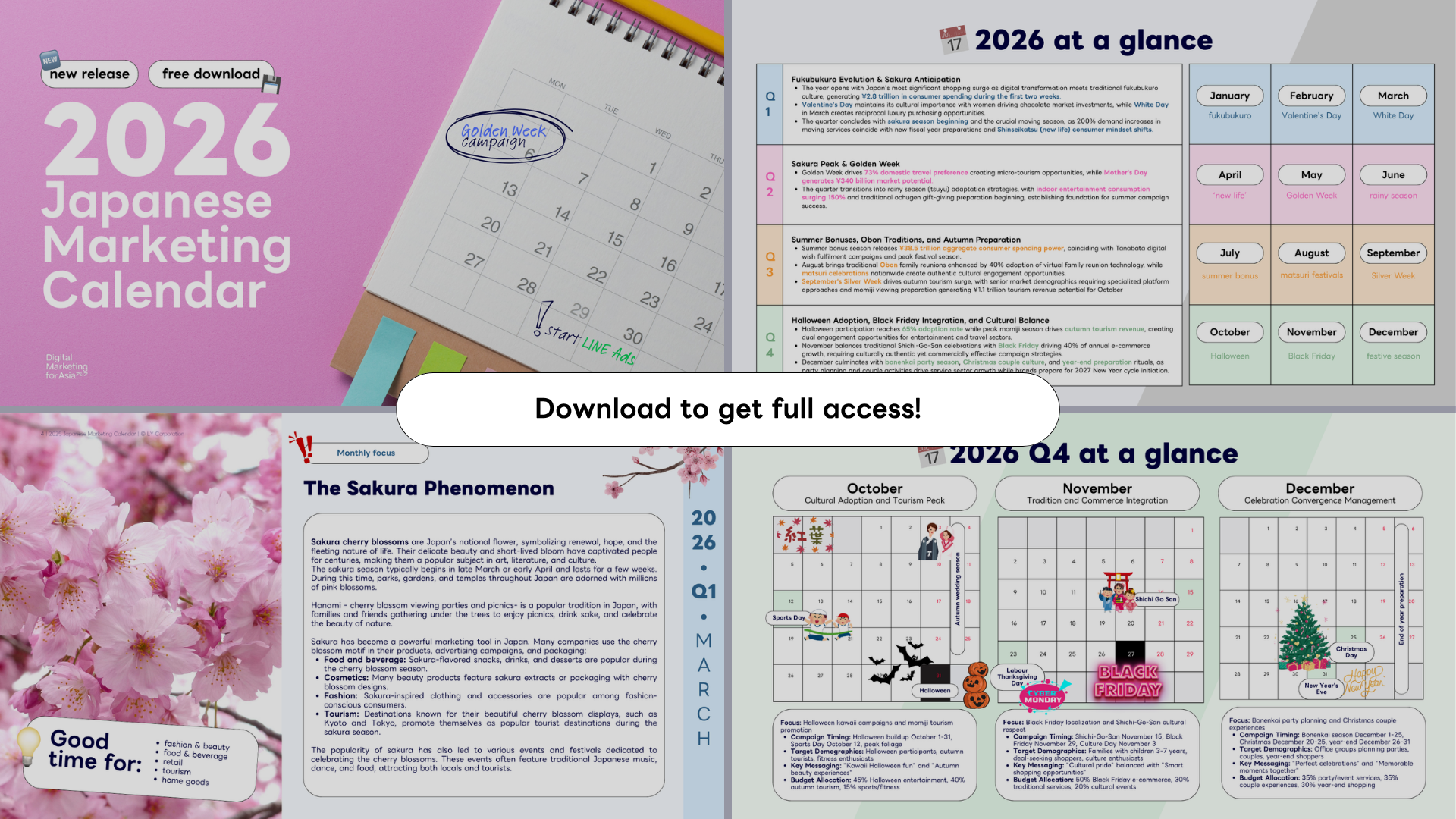
Download our 2026 Japanese Marketing Calendar to incorporate the seasonalities into your marketing strategy →
3. Build Trust Through Consistency and Quality
Avoid aggressive sales tactics. Avoid overly casual or direct language. Instead, emphasise:
✅ Quality and reliability of your products/services
✅ Long-term value rather than short-term discounts
✅ Consistency across all touchpoints (website, social media, customer service, advertising)
✅ Detailed product information (Japanese consumers want comprehensive details, not marketing fluff)
4. Adapt Your Website and Digital Presence
Japanese websites typically include more information on the homepage than Western websites, which favour minimalist design. Adjust your website layout, information hierarchy, and user experience accordingly.
✅ Provide detailed product specifications and instructions
✅ Include customer testimonials and reviews (trust-building elements)
✅ Ensure seamless Japanese payment options (PayPay, Line Pay, convenience store payments, JCB cards)
✅ Optimise for mobile-first browsing (critical in Japan)
5. Localise for Japanese Search Behaviour
Japanese consumers rely heavily on Yahoo! JAPAN, LINE, and YouTube for search and discovery – not just Google. Conduct keyword research specific to Japanese search habits. Work with local SEO specialists to understand which keywords and content strategies resonate with Japanese users.
⭐️ Principle 1: Politeness and Respect
Japanese communication is inherently hierarchical and polite. Even in advertising, use respectful language (敬語, keigo). Avoid colloquialisms or overly casual phrasing that might feel disrespectful or confusing[3].
⭐️ Principle 2: Understatement Over Hyperbole
Western advertising often relies on bold claims and superlatives. Japanese advertising tends towards understatement and subtle persuasion. Instead of “The BEST product ever!” try “A trusted choice for many customers.”
⭐️ Principle 3: Emphasis on Harmony and Community
Japanese culture values collectivism and fitting in. Avoid positioning your brand as “different” or “rebellious.” Instead, emphasise how your product helps customers integrate into their community or fulfill social expectations.
⭐️ Principle 4: Quality and Detail Over Price
Avoid aggressive discount messaging. Focus on quality, craftsmanship, durability, and the detailed benefits of your product. Japanese consumers are willing to pay premium prices for premium quality.
❌ Direct Contradictions: Don’t claim superiority over competitors. Japanese consumers find this aggressive and off-putting.
❌ Excessive Individuality: Don’t frame your product as a way to “stand out” or “be unique.” Instead, position it as a quality choice that respects tradition while embracing modernity.
❌ Inappropriate Humour: What’s funny in English might be confusing or offensive in Japanese. Avoid sarcasm, dark humour, or references that don’t translate culturally.
❌ Ignoring Hierarchy: If featuring people in ads, ensure they’re appropriate to the context. Avoid overly casual relationships or disrespectful tone.
❌ Missing Seasonal Context: Launching a campaign at the wrong time of year can feel tone-deaf. Align your messaging with seasons and cultural moments.
✅ “多くのお客様に選ばれる、信頼できる品質” (Ooku no okyakusama ni erabareru, shintai dekiru hinshitsu)
Chosen by many customers, quality you can trust.
✅ “世代から世代へ、大切に使い続ける” (Sedai kara sedai e, taisetsu ni tsukaitsudzukeru)
Passed down through generations, cherished with each use.
✅ “お客様のご期待を超える、おもてなしの心” (Okyakusama no go-kitai wo koeru, omotenashi no kokoro)
Exceeding customer expectations with genuine hospitality.
For campaign effectiveness in Japan, prioritise localised imagery featuring:
✅ Japanese people and faces (reflecting the target audience)
✅ Japanese settings and contexts
✅ Authentic, high-quality photography (not stock photos)
✅ Cultural elements that demonstrate respect and understanding
This doesn’t mean completely abandoning global brand assets, but rather using them strategically alongside heavily localised campaign content.
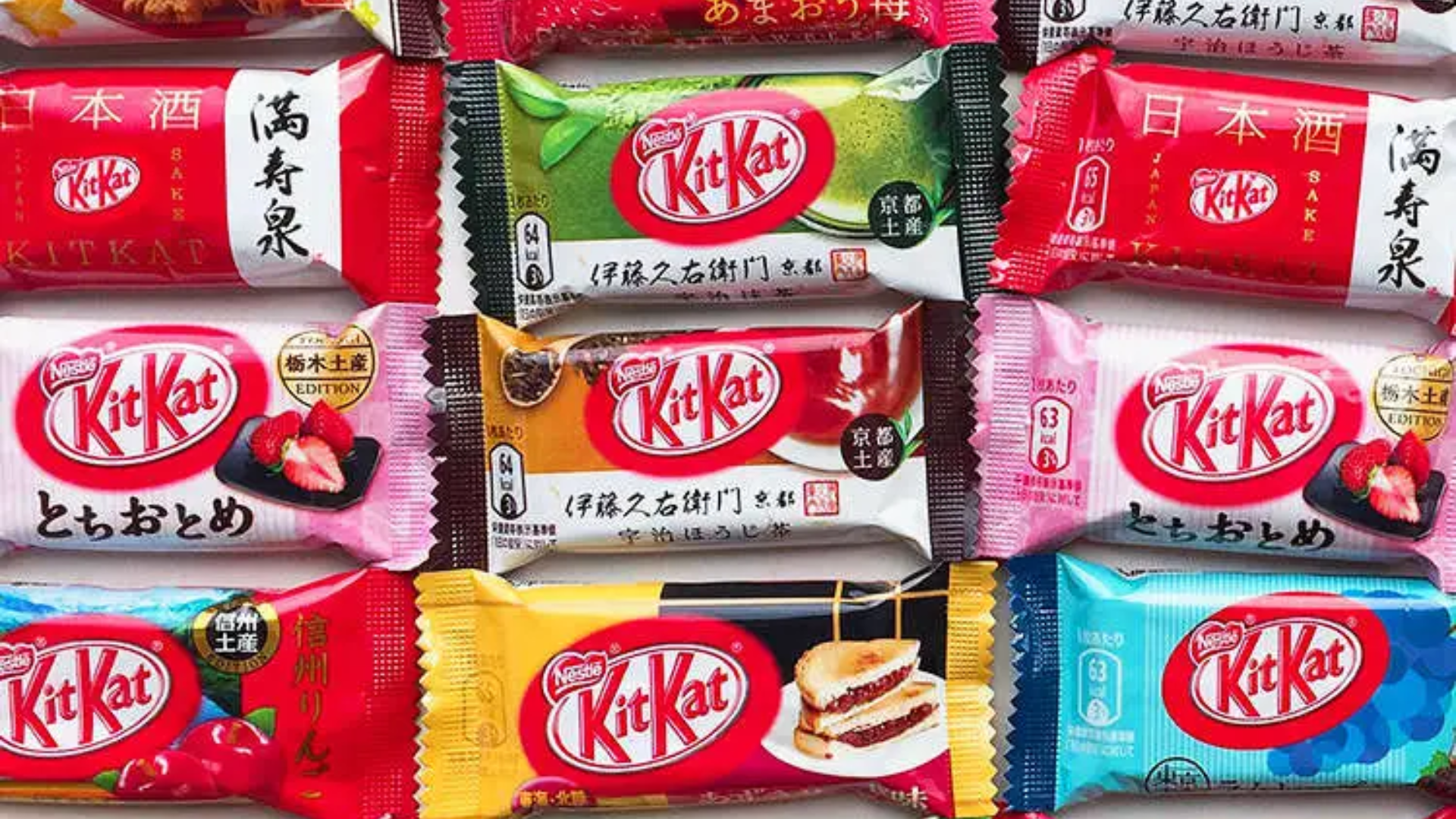
KitKat arrived in Japan as a global product with standard flavours and packaging. Instead of staying generic, Nestlé invested heavily in Japanese localisation and transformed KitKat into a cultural phenomenon.
🤤 Flavour Innovation:
KitKat created dozens of Japan-exclusive flavours: matcha (green tea), sakura (cherry blossom), sake, yuzu, wasabi, and regional specialties. This signalled deep respect for Japanese taste preferences and culinary traditions.
🇯🇵 Cultural Positioning:
KitKat identified a homonym: the name sounds like “Kitto Katsu” (必ず勝つ), meaning “surely win.” Nestlé positioned KitKat as a good luck charm for students preparing for university entrance exams—a massive cultural moment in Japan. This transformed the product from a snack into a cultural symbol.
💝 Packaging and Design:
KitKat partnered with local Japanese artists and designers to create limited-edition packaging featuring traditional Japanese art, seasonal themes, and cultural references. Each regional variation came with unique packaging reflecting local culture.
📥 Distribution Strategy:
Rather than selling exclusively through supermarkets, KitKat partnered with convenience stores, specialty shops, and even temples and shrines—making the product accessible and culturally embedded.
 Source: Live Japan
Results:
⭐️ KitKat became the best-selling chocolate brand in Japan.
⭐️ The product generated massive social media buzz (especially during exam season).
⭐️ Regional variants became collectables.
⭐️ Tourists bought KitKat as quintessential Japanese souvenirs.
⭐️ The brand achieved premium pricing despite being a chocolate bar.
Key Lesson: Localisation isn’t about compromising your brand identity. It’s about expressing your brand identity in a way that resonates culturally. KitKat remained KitKat while becoming authentically Japanese.
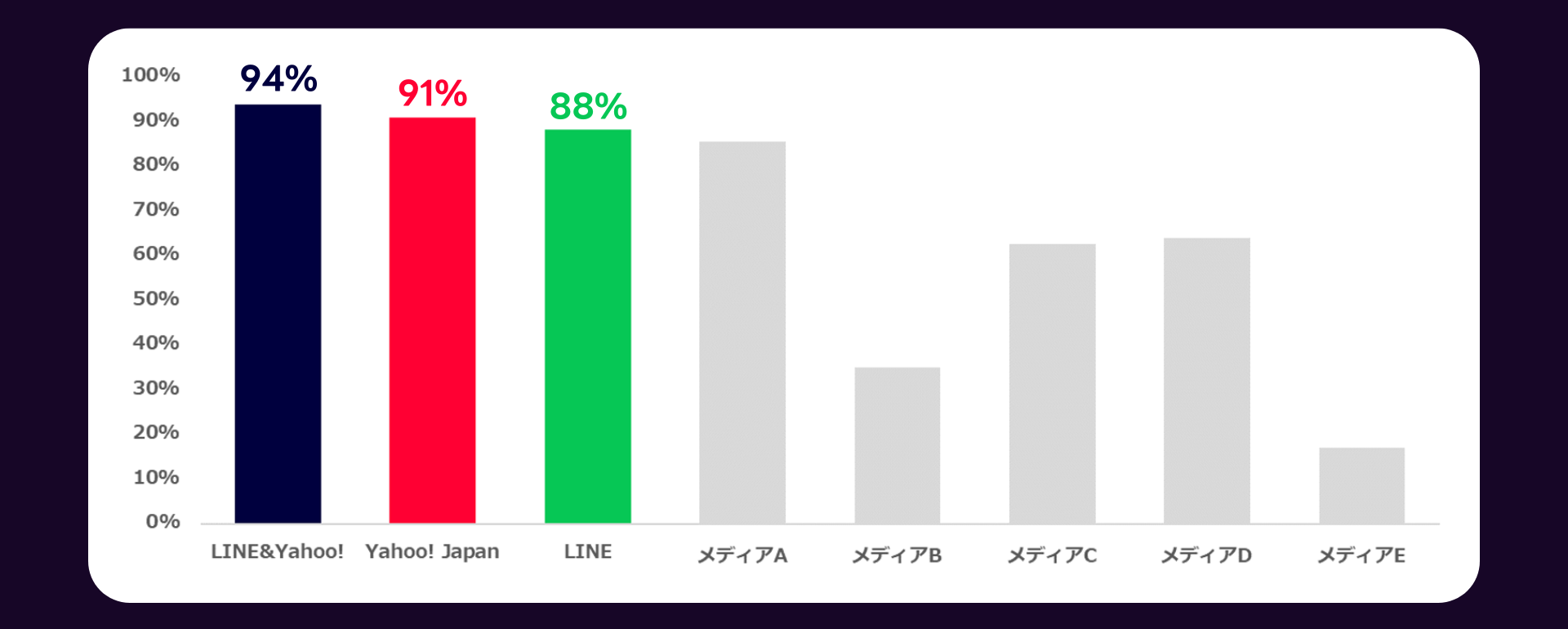
If you’re serious about reaching Japanese consumers, LINE and Yahoo! Japan aren’t optional channels – they’re essential.
With a staggering 94% reach among active smartphone users in Japan, Yahoo! JAPAN and LINE together boast an overwhelming advantage over other media channels.
Combined Strategy
Launch a coordinated campaign where Yahoo! Japan ads drive search intent and conversions, while LINE ads build brand awareness and upper-funnel engagement. Track performance across both platforms using shared audience insights. This approach maximises reach, builds trust, and optimises conversion funnels.
Entering the Japanese market without genuine localisation isn’t a viable strategy – it’s a gamble you’ll likely lose.
Japanese consumers are sophisticated, discerning, and remarkably loyal once you earn their trust. They expect brands to demonstrate respect for their culture through thoughtful language, authentic imagery, culturally aligned messaging, and presence on platforms where they actually spend time (LINE and Yahoo! JAPAN).
Localisation isn’t an expense. It’s an investment that determines whether you succeed or fail in one of the world’s most valuable markets.
The brands that thrive in Japan – Starbucks, KitKat, McDonald’s, Airbnb – all recognised this fundamental truth. They didn’t export global campaigns and hope for the best. They invested in understanding Japanese culture, values, and consumer behaviour. They adapted their marketing materials, imagery, messaging, and advertising strategies to feel authentically Japanese.
You can do the same. Start with this foundation:
✅ Invest in professional transcreation and localisation services.
✅ Conduct thorough market research into your specific target audience.
✅ Use localised imagery featuring Japanese people and contexts.
✅ Craft messaging that emphasises quality, trust, and cultural harmony.
✅ Build your advertising strategy around LINE and Yahoo! Japan.
✅ Create a Japanese marketing calendar aligned with seasonal and cultural moments.
✅ Partner with local experts who understand the nuances you’ll inevitably miss.
The Japanese market is waiting. But it’s waiting for brands that respect it enough to localise authentically.
Translation focuses on converting words from one language to another, while localisation adapts messaging, visuals, and experiences to Japanese culture, values, and expectations. In Japan, localisation often includes adjusting honorifics, levels of politeness, visual design, payment options, and even product positioning so it feels “made for Japan,” not imported.
Japanese consumers tend to be risk‑averse and place high value on trust, reliability, and reputation, so poorly localised content can quickly undermine brand credibility. Well-executed localisation signals commitment to the market, improves engagement and conversion rates, and helps foreign brands compete with established domestic players.
Frequent mistakes include relying on direct machine translation, using overly casual or overly direct language, and ignoring Japanese business etiquette such as proper titles and formal greetings. Brands also misstep by reusing global imagery that does not reflect Japanese professionals, missing key seasonal moments (like Golden Week or year‑end gifting), and overlooking channels such as LINE and Yahoo! Japan that are critical locally.
Effective Japanese B2B and professional copy is typically polite, concise, and benefit‑driven, with a strong focus on quality, reliability, and long‑term partnership rather than bold claims. For visuals, professional audiences respond well to clean layouts, minimalistic design, subtle color palettes, and imagery that features realistic Japanese office environments and teams, rather than generic Western stock photos.
In addition to global platforms, brands should prioritise LINE for messaging, CRM-style engagement, and ads, and Yahoo! JAPAN for search, display, and native advertising, as both remain central to daily online behavior. Using these channels together with localised landing pages, Japanese customer support options, and locally relevant offers can significantly increase reach and conversion for both B2C and B2B campaigns.
We are official media reps for LINE and Yahoo! JAPAN platforms. This means that we are able to provide our clients with comprehensive support services completely free of charge.
⭐️ A dedicated specialist provides strategic guidance and operational support, free of charge.
⭐️ Comprehensive support from account creation to set up and activation.
⭐️ No contracts or minimum needed.
⭐️ The latest information such as market trends and industry insights to help your planning.